The following are complete webinar recordings in chronological order. Paging is available at the bottom of the page to sequence through the list or use Filter by Speaker on the right to see a listing by a specific speaker. To view a listing in alphabetical order by presentation title, use the Return to Library link in the sidebar.
Click on the title of the webinar to visit that page for online viewing. The PDF handout for the webinar is available for download on the same page. A complete listing of all handouts, with links, are available on the Member Webinar Handouts page.
Recordings of live webinars will be added to this page, typically two to three weeks after the live presentation.
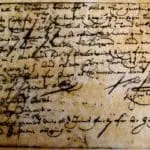
- A Salisbury Diary: Extracting Evidence for Context and Content
 — Presented by Jill Morelli, CG — What is “context” and how can we use it to understand the lives of our ancestors? Learn how to conduct a search for manuscripts and integrate the experiences into the life events of another.
 - How Old Did He Have To Be…?— Presented by Judy G. Russell, JD, CG®, CGLSM — Knowing a person’s age is often the key to distinguishing between two people of the same name. But if no record gives a birth date, how do you know how old someone was? The law can often give the answer.
- Timelines in Genealogy: A Valuable Tool & Definitely Worth the Time— Presented by Diane L. Richard, MEng, MBA — Learn about timelines and how they might help you solve your puzzles. Creating a chronological multi-columned matrix can help you focus on missing gaps, clarify seemingly contradictory information, discover previously invisible relationships, and identify paths to future discoveries.
- On the Road Again: Are Your Ancestors Hiding in Road Records?— Presented by Diane L. Richard, MEng, MBA — Roads were built and maintained by the local community, thus the members of the road crews were appointed by the county court. The records provide incredible insight … at a time when few other records were being created.
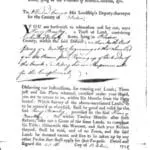
- Where They Walked: Working With Deeds— Presented by Kathy Gunter Sullivan, CG — Researching deeds, discussing terminology, the variety of conveyances a researcher may encounter, analyzing details, and following clues to additional resources.
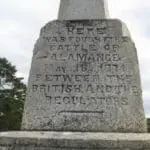
- Proving Parentage with Probate Records: North Carolina Inheritance Laws and Customs— Presented by Helen F. M. Leary, CG (Emeritus), FASG, FNGS — This webinar details where to look for land records and why they are important. North Carolina inheritance law and probate are explained. Analysis of the evidence found in these documents can yield clues to your ancestor’s prior location ...
- Identifying Robert Walker’s Ancestry— Presented by Pam Stone Eagleson, CG — Robert Walker of Rockingham County, North Carolina, and Orange County, Indiana, vanished without a trace in 1829. This webinar will discuss what the records (census, probate, land), etc. revealed … and how the evidence supports the conclusion.
- Colonial to Civil War Records in the North Carolina Archives— Presented by Craig R. Scott, CG, FUGA — Most researchers seem to think that military records are only located in the National Archives. The North Carolina Archives holds a treasure trove of records that cannot be found in Washington, DC. Most of the records are financial in nature.
- Missing Mothers and How to Find Them: Antebellum NC Property Laws and Their Effect on our Research— Presented by Helen F. M. Leary, CG (Emeritus), FASG, FNGS — We recognize, in the abstract, that half our ancestors were female. If we understand property laws, we can direct our research to the records and analyses that help us unmask them.
- Born in NC & Living Elsewhere: Making the Connection Back— Presented by Diane L. Richard, MEng, MBA — What if you only know born NC from a census, military record, or a child’s death record? Is it possible to figure out where in NC? This webinar will present some rules of thumb and strategies for research into those born ...